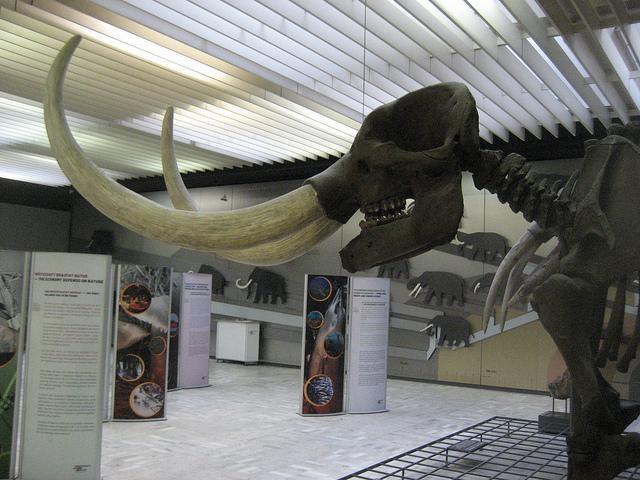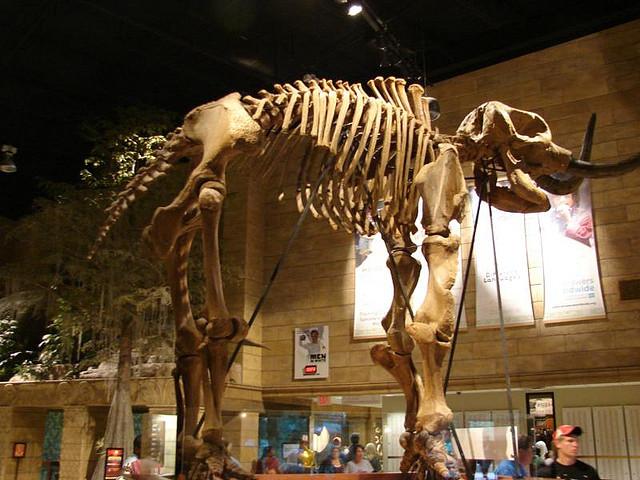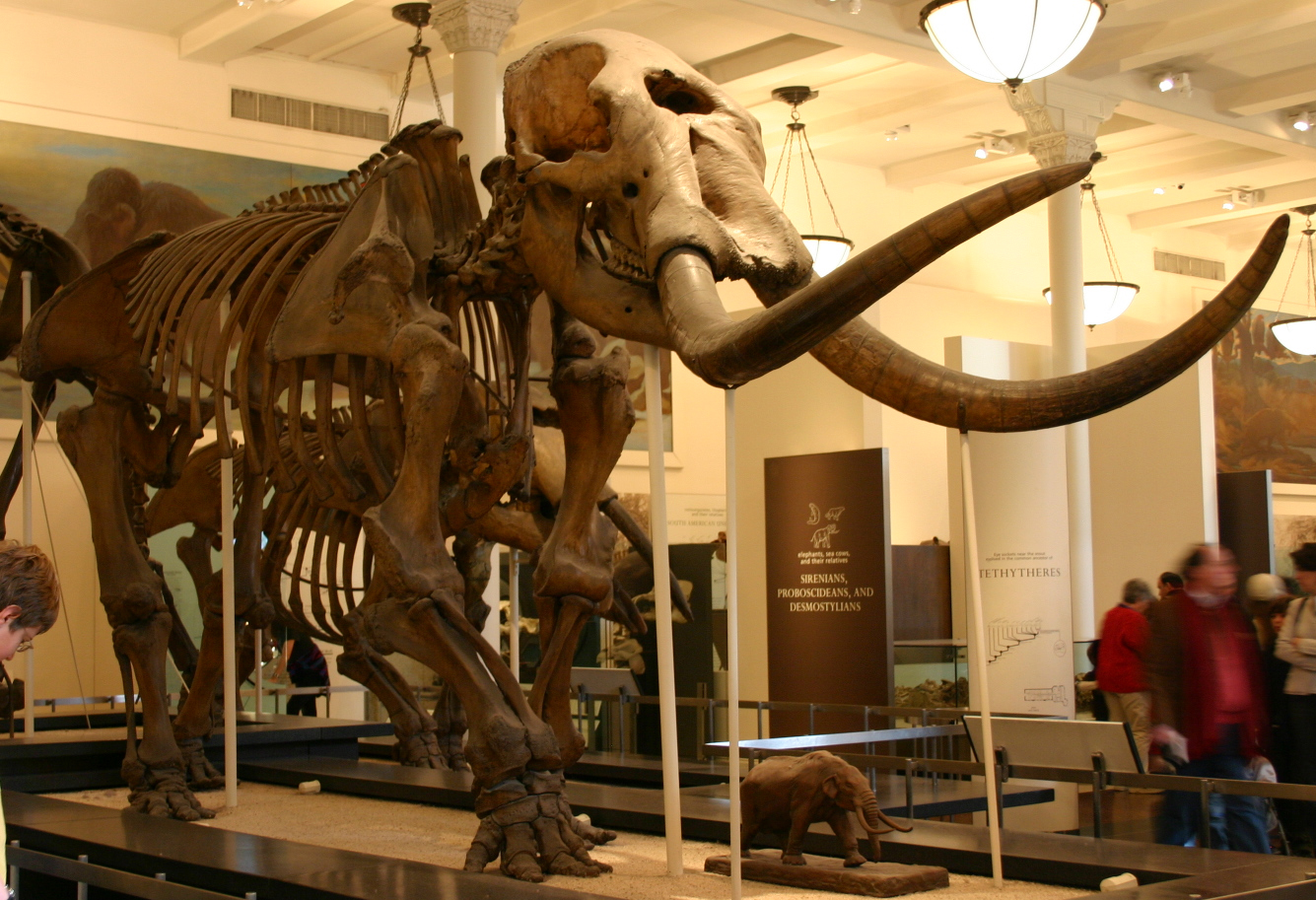
Mastodon fossil skeleton (Mammut americanum); photo by Ryan Somma on Wikipedia (use permitted with attribution / share alike: CC BY-SA 2.0).
Official State Fossil of Michigan
The giant mastodon (Mammut americanum) was designated the official state fossil of Michigan in 2002. All State Fossils
This magnificent animal disappeared from North America about 10,000 years ago. One of the most complete mastodon skeletons ever found was discovered near Owosso, Michigan (it is displayed at the University of Michigan's Museum of Natural History). The longest and most intact trail of mastodon footprints ever uncovered are also in Michigan, near Ann Arbor (about 30 footprints).
The campaign to adopt the mastodon as Michigan’s state fossil was led by David P. Thomas, Sr. (a geology instructor at Washtenaw Community College in Ann Arbor). He obtained Bill 397 from Senator Thaddeus McCotter in 2000, held petition drives, attended Rock Club meetings, attended the Michigan State Hearings, and won support from teachers and students.
What is the difference between a mastodon and a mammoth?
The American mastadon is different from the woolly mammoth (also found in Michigan but in fewer numbers). Mastodons had straighter tusks and both the body and head of the mastodon is longer and squatter than the woolly mammoth (its back doesn't slope like a mammoth's).
Mastodons were about the size of Asiatic elephants of today, but their ears were smaller than modern elephants. They had thick body hair similar to a mammoth, but mastodon teeth suggest the diet of a browser, not a grazer (unlike modern elephants and mammoths). The mastodon also lacks the high, peaked knob on the head seen on the woolly mammoth. Mastodons are an older species, originating in Africa 35 million years ago and entering North America about 15 million years ago.