


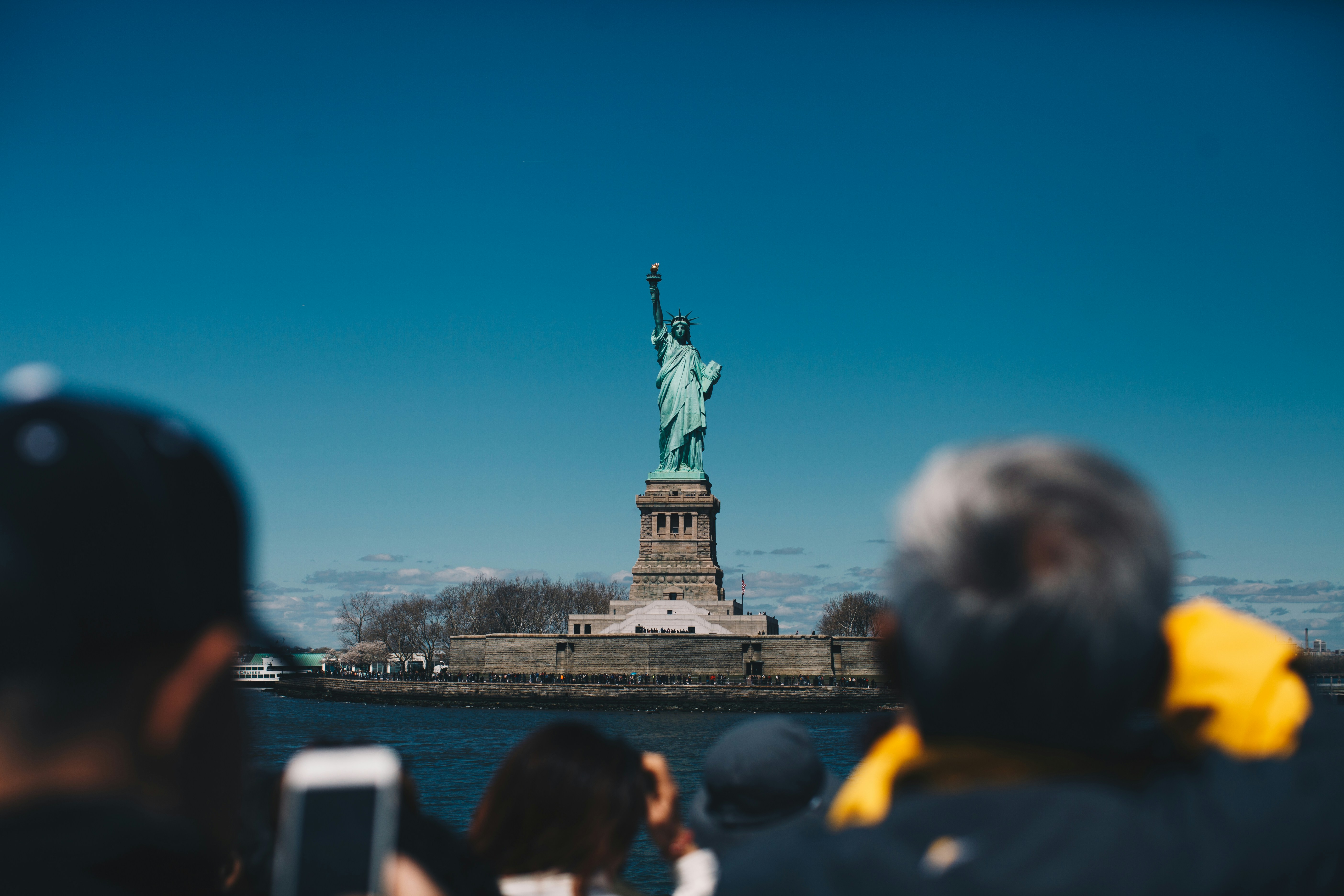
Photo by Jenny Marvin on Unsplash
A trip across the United States can be more than a collection of famous views. The Statue of Liberty, the bald eagle, the Liberty Bell, Yellowstone and other American icons carry pieces of the country’s history and identity. They also sit in very different places, from busy city centers to huge national parks.
For travelers, there is a practical side to seeing them. A phone is often used for directions, attraction information, reservations, transit, messages and travel updates. An eSIM can keep that connection available without making a visitor depend on a physical SIM card. It simply makes the practical side of the trip easier.
Why Connection Matters When Visiting American Symbols
State Symbols USA covers national symbols such as the bald eagle, American bison, Washington, D.C., the Liberty Bell, the Statue of Liberty and the Lincoln Memorial, alongside national parks, landmarks and historic places. That combination makes sense: symbols often become meaningful because they are connected to real places people can see.
Before a trip, an eSIM can be set up alongside other travel essentials. A service such as eSIM Plus can be considered when a traveler wants mobile connectivity without changing the physical SIM in a phone. A separate virtual phone number can also be useful for messages or account verification while abroad. The point is simply to have the phone ready before the first ferry, museum visit or long drive.
1. The Statue of Liberty: A Symbol Best Seen in Context
The Statue of Liberty is listed by State Symbols USA as the national symbol of freedom. It stands in New York Harbor, where the setting is part of the experience. Seeing the statue from a ferry or the waterfront gives visitors a better sense of its scale than a photograph.
New York also creates a practical connectivity problem. A visitor may be checking ferry information, navigating to Battery Park, confirming a reservation, messaging a companion or looking up the next stop. An eSIM makes it easier to keep those tasks on the same phone while moving around the city.
An American symbol becomes an actual destination, and the phone becomes part of reaching it.
2. Washington, D.C. and the Bald Eagle
The bald eagle is the national bird, while Washington, D.C. is the national capital listed by State Symbols USA. Together they offer a natural starting point for exploring American civic history. The city is full of monuments, museums and government buildings, many of which can be reached on foot or by public transportation.
A connected phone is handy in D.C. because sightseeing can involve several stops. Visitors may use maps, public transit information, museum details or messages to their group. A virtual number can also be useful if a service requires SMS verification and the traveler does not want to rely on a home-country number.
The technology stays in the background. The main attraction remains the symbols and places that explain how the country represents itself.
3. The Liberty Bell and Philadelphia’s Historic Center
The Liberty Bell is another national icon included in the State Symbols USA collection. It is associated with American independence and is located in Philadelphia’s historic district, close to several other important sites.
Philadelphia is well suited to a walking itinerary, but visitors may still need maps, opening information, transit directions, restaurant bookings and messages throughout the day.
An eSIM is practical for travelers arriving from another country because it provides mobile data without immediately dealing with a local physical SIM. The phone can stay useful while the traveler concentrates on the history around them.
4. Yellowstone and the American Bison
The American bison is the national mammal, and Yellowstone is one of the places where visitors can encounter bison in the wild. State Symbols USA also includes Yellowstone among its featured places. The park is very different from New York or Philadelphia: distances are large, roads can be slow, and mobile coverage should not be treated as guaranteed everywhere.
That changes how connectivity should be approached. An eSIM can provide mobile data where a network is available, but travelers should still download maps and essential information before entering remote areas. A connected phone is useful for checking routes, weather and reservations, while an offline plan matters when service disappears.
The bison is not interesting because a phone can help you find it. It is interesting because it connects a national symbol with an actual American landscape.
5. The Grand Canyon: A Symbol of the American Landscape
The Grand Canyon is not a national symbol in the official category, but it is one of the country's most recognizable natural landmarks. State Symbols USA includes Grand Canyon National Park among its place entries.
For visitors, the canyon is a good example of why connectivity should be planned rather than assumed. A road trip may involve long stretches between towns, and a traveler may need navigation, hotel details, weather information or a message to someone waiting elsewhere. An eSIM can make the connected parts of the journey easier, while downloaded maps provide a backup in areas with weak service.
6. Mount Rushmore and the Black Hills
Mount Rushmore is one of the landmarks featured by State Symbols USA. The carved presidential faces are an instantly recognizable image of the country, but visiting the monument also puts travelers in the Black Hills of South Dakota.
This is a setting where a phone can be more useful for navigation than for sightseeing. Visitors may drive between Mount Rushmore, nearby towns and other attractions, checking roads or finding places to eat. An eSIM can keep data available during the parts of the journey covered by a compatible network.
Road trips depend on many small details working together.
7. Hawaii: Natural Places and National Identity
Hawaii adds another side to American places. Its landscapes, cultural traditions and historic sites show how national identity can contain very different regional experiences.
Island travel also creates a need for practical phone access. Visitors may need directions, accommodation information, flight updates, maps and messages while moving between beaches, towns and other attractions. An eSIM can avoid the hassle of swapping physical SIM cards during the trip.
The technology should support the trip.
8. National Parks and Historic Places: Plan for the Gaps
The biggest lesson from visiting American symbols and landmarks is that the country does not have one travel environment. A visitor can move from a crowded city with constant connectivity to a national park where service is limited within a few hours.
State Symbols USA's places section reflects that variety, covering cities and towns, historic buildings, historic markers, landmarks, local parks, national parks and state parks.
A sensible connectivity plan is therefore worth having. Install the eSIM before a major excursion, save important addresses and reservations, download offline maps and keep essential contact details available. A virtual number can cover situations where a traveler needs a separate number for calls or SMS-based services.
The phone should support the trip.
American symbols become more interesting when they are connected to the places, landscapes and stories behind them. The bald eagle leads naturally to Washington, D.C.; the American bison points toward wild landscapes such as Yellowstone; the Liberty Bell connects a physical object with Philadelphia’s history; and landmarks such as the Statue of Liberty and Mount Rushmore turn familiar images into places that can actually be visited.
An eSIM fits into this kind of trip because it solves a practical problem in the background. It keeps a traveler connected to maps, reservations, messages and other essentials while the focus stays on the country itself.
For an international visitor, that preparation means less time dealing with phone logistics and more time seeing the place that brought them there.